
Plein Air Painting Guide
A practical field guide for painting directly from life.
Paint outside. Look longer.
Plein air is simple in theory: take your materials outside and work from what is in front of you. In practice, light moves, weather changes, people stop to talk and your setup has to travel.
The aim is not to control all of that. It is to make a few clear decisions before the scene changes. Pack light, choose the effect you want to keep, and let direct observation do most of the work.
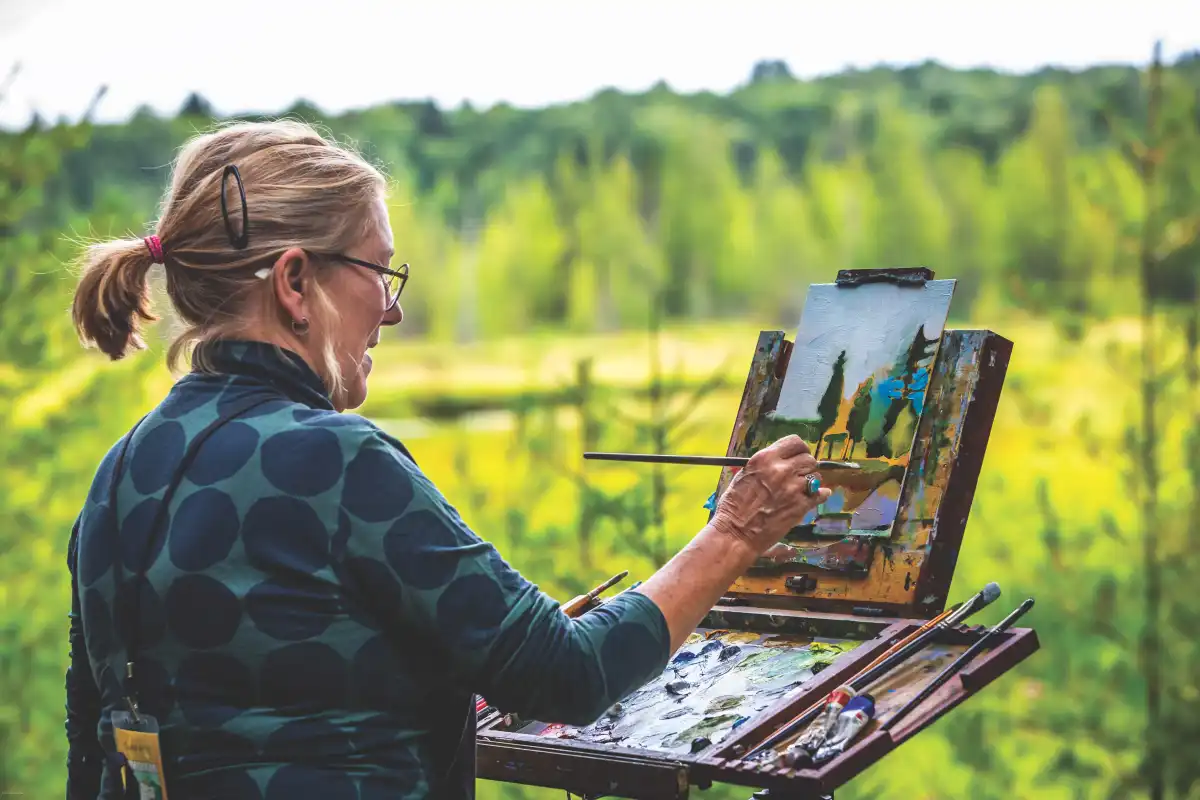
What to bring
Keep the kit smaller than you think. The best setup is the one you can carry, open and pack away without turning the outing into a logistics exercise.
Core painting kit
Portable easel, pochade box or drawing board
2–4 small supports or sheets
Limited palette
Brushes or drawing tools
Medium or water
Rag, tissues and a small waste bag
Comfort & weather
Water
Hat and sunscreen
Layers for changing temperature
Clips or tape
Light stool if you use one
Insect protection when needed
Useful extras
Umbrella or shade
Viewfinder
Palette knife
Gloves
Phone with Paintomic App
Portable charger
A simple bag for wet panels
Your medium changes the details, not the principle: carry only what you can set up and pack away quickly.
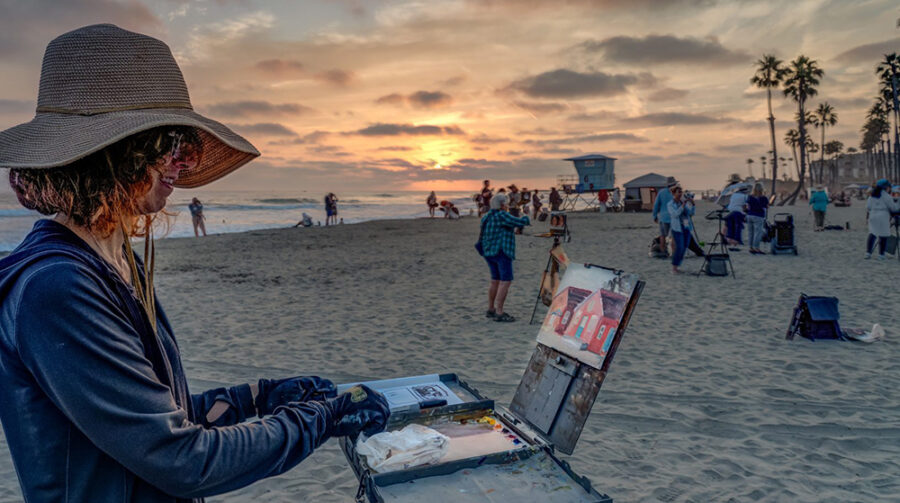
A simple field setup
1. Find a stable position. Stay out of paths and choose a place where you can work safely.
2. Decide the format first. Horizontal, vertical or square. Make that decision before you start chasing details.
3. Make a tiny thumbnail. Reduce the scene to a few big shapes and values.
4. Prepare the essentials. Put only the brushes, colors and tools you expect to use within reach.
5. Decide when to stop. A small painting can be complete long before the landscape stops changing.
Read the scene before you paint it
Plein air becomes easier when you stop naming objects and start comparing relationships.
Start with big shapes
Look for two or three large masses before small objects. A tree, a building and the sky are easier to organize than fifty separate details.
Squint for values
Reduce the scene to light, middle and dark. If the value pattern works, color has somewhere solid to sit.
Choose what to leave out
Nature gives you too much information. Editing is part of observation. Remove anything that weakens the main idea.
Light moves. Keep the painting still.
Choose the light effect you want to keep. Once the sun moves, do not repaint every shadow just because the scene has changed.
Mark the important shadow shapes early. If you are beginning, a focused session of around an hour can be more useful than trying to finish everything outdoors.
Paint the light you chose, not every version of the light that appears afterwards.
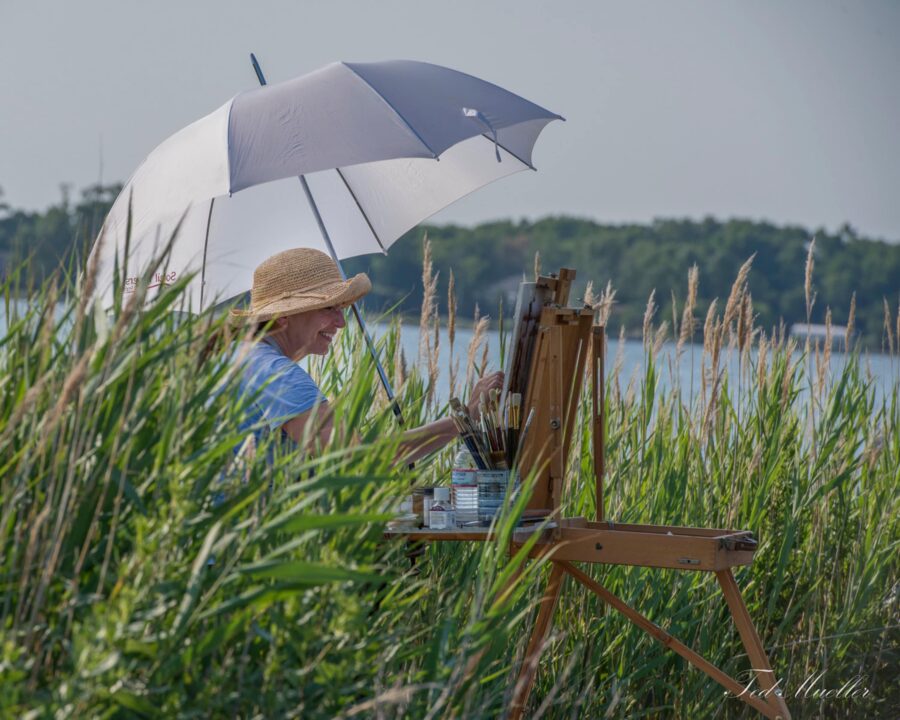
Weather, comfort and good habits
Wind: lower the easel, secure the support and work smaller.
Strong sun: try to keep the painting and palette under similar light. A shaded palette and a painting in full sun can make color judgments difficult.
Heat or cold: shorten the session and dress for the conditions. Comfort affects concentration.
Rain: protect materials first. Use an umbrella only when wind and the location make it safe.
Leave no trace: carry away paint waste, used tissues and solvents. Respect private property, paths and local rules.
Use Paintomic App as a check, not as the subject
The phone should help your eye return to the real scene, not replace it.
Use Paintomic App when you need to check proportions, angles, values, colors, masses or visual relationships. Make the check, put the screen down and look again at the subject in front of you.
The more often your attention returns to life, the more useful the digital tool becomes.
Choose your physical paints
Before setting out, choose Basic, Zorn or Custom in My palette. For Oil, Gouache or Mixed media, add and remove named paints to match the colors you carry.
Check the color balance
Photograph the scene and explore Image colors. Compare the larger color areas with smaller accents, then return to the landscape and plan the painting.
Study a difficult color
Select a color in your reference and use the suggested mixture and proportions to guide a small test with your physical paints. Adjust it by looking at the real scene.
Check the easel setup
Open Preferences and Level easel. Hold the device securely against the easel or drawing board, read the bubble and angle scale, and adjust your working position.
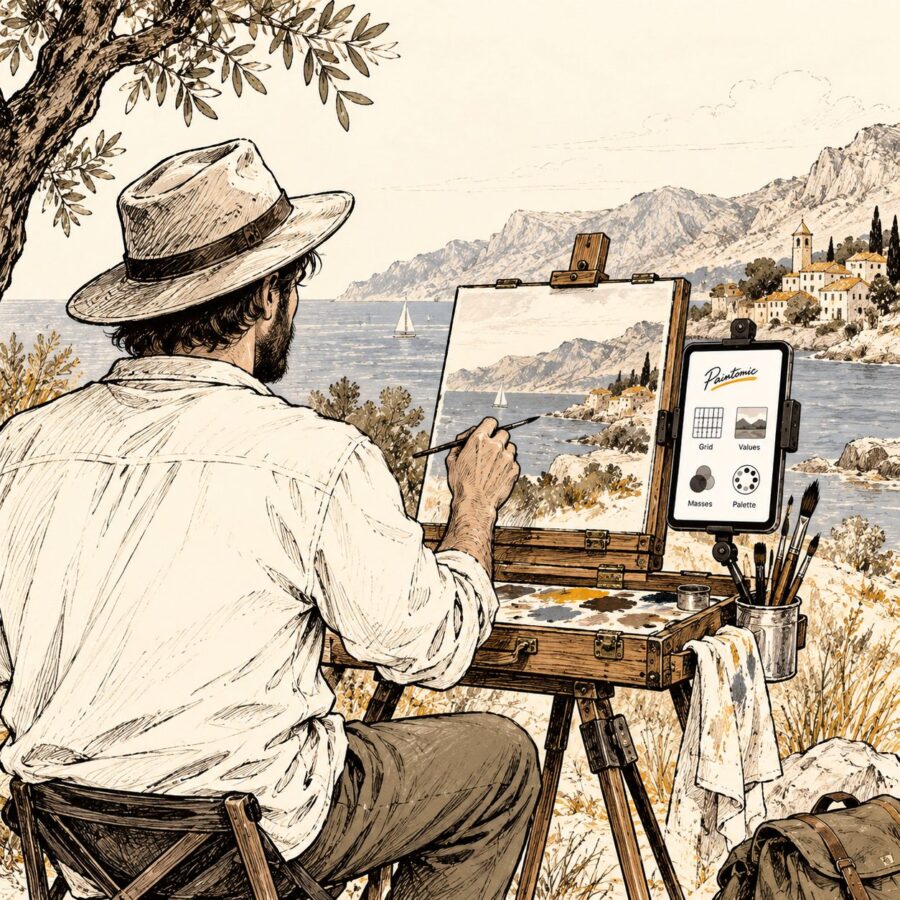
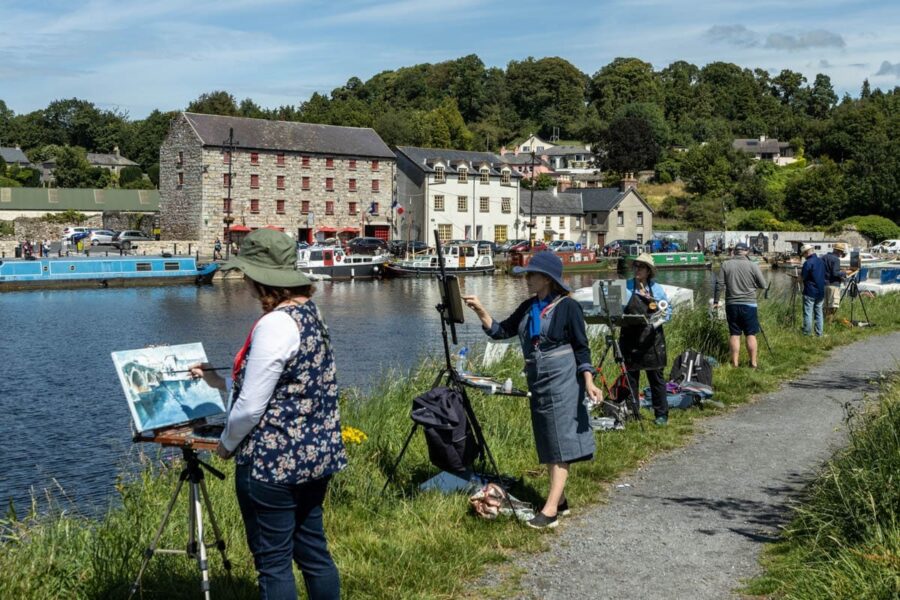
Paint with other people
A paint-out removes some of the friction of going alone: the place is chosen, there is a reason to show up and everyone is solving a different version of the same visual problem.
Do not compare finished paintings too quickly. One of the most useful things about painting in a group is seeing how differently other artists simplify the same scene.
Associations & useful resources
A few good places to find communities, paint-outs, workshops and plein-air events.
Plein Air Painters of America
A long-running professional organization dedicated to painting directly from life, exhibitions and education.
Outdoor Painters Society
Community, paint-outs and events for artists interested in painting outdoors.
Art in the Open
An established plein-air festival in Wexford, Ireland, with painting locations, workshops and exhibitions.
PleinAir Magazine / OutdoorPainter
Articles, artist interviews, event listings and resources for outdoor painters.
Plein Air Convention & Expo
A major gathering focused on demonstrations, instruction, materials and painting together outdoors.
Quick field checklist
□ Painting surface or sketchbook
□ Easel, board or pochade box
□ Paints / pencils / drawing tools
□ Brushes and palette
□ Water or medium
□ Rag or tissues
□ Clips, tape or panel carrier
□ Drinking water and weather protection
□ Phone with Paintomic App
□ Small bag for your waste
Before you leave: look at the painting once from a distance. Decide whether it needs another mark before making it.
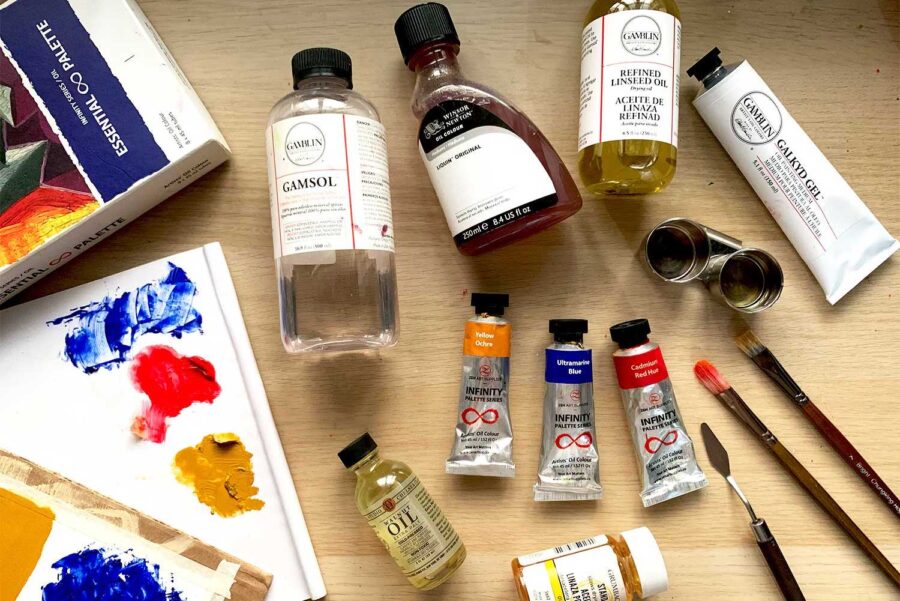
The best plein air kit is the one you actually take outside.
Start small. Go often. Keep looking at the real thing.
Recommended Reading
Books to support your practice, with links to publishers or the author’s official book list.
Mitchell Albala
A strong all-round reference for simplification, massing, composition, color and natural light.
John F. Carlson
A classic text on landscape structure, values, perspective, trees and the organization of outdoor light.
Mitchell Albala
Practical studies focused on shape, composition and color, useful both outdoors and back in the studio.
Haidee-Jo Summers
A practical guide to choosing subjects, working alla prima, handling changing light and painting outdoors in oils.
Grahame Booth
A useful companion for watercolor painters covering equipment, subject selection, atmosphere and changing outdoor conditions.
Juliette Aristides: Painting & Drawing
Begin with the two painting books below. The drawing manuals support proportion and form; the final volume explores artistic practice.
Juliette Aristides
Painting
Traditional studio methods for working with color and painting from life.
Juliette Aristides
Painting
Exercises in value, grisaille, color temperature and painting technique.
Juliette Aristides
Drawing foundations
A structured introduction to observation, proportion and form.
Juliette Aristides
Drawing foundations
Progressive lessons for developing observation and drawing skills.
Juliette Aristides
Drawing practice
A workbook for building drawing skills through regular practice.
Juliette Aristides
Figure drawing
Step-by-step studies of the human figure.
Juliette Aristides
Artistic practice
Reflections and exercises on sustaining a creative life.